
How to Bathe Your Dog at Home in Kerala: A Step-by-Step Guide for Humid Weather
November 2026 — Neolokam, Trivandrum
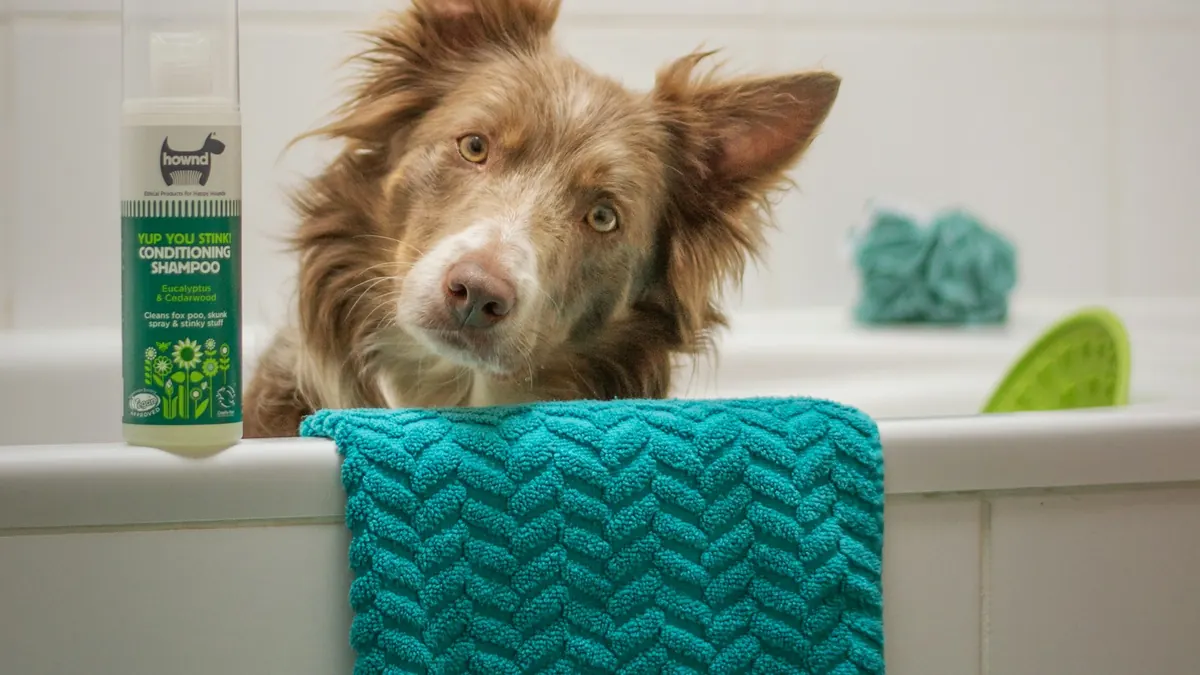
To bathe a dog at home, brush the coat first, wet it to the skin with lukewarm water, wash with a shampoo made for dogs, rinse until the water runs clear, and then dry the coat completely, right down to the skin. In Kerala, that last step is the one that matters most: a coat left damp in humid air is where itchy skin, smells and fungal problems start. This guide is written for dog owners in Trivandrum (Thiruvananthapuram) and the rest of Kerala, where the air stays humid for most of the year and the monsoon can keep a coat wet for days. It covers how often to bathe by coat type, what to buy, the water temperature, protecting the ears, drying properly, the tick check that should follow every bath, and when it is kinder to call a professional groomer.
Current package
Doorstep Dog Grooming
From ₹1,700 per session + 18% GST. A complete professional groom at your home by a two-person team.
How often to bathe your dog, by coat type
A useful starting point is a bath about once a month, adjusted to your dog's coat, skin and lifestyle. The American Kennel Club says that with a gentle dog shampoo, most dogs can be bathed as often as weekly without drying out the coat, so a dog that gets muddy every day is not harmed by an extra wash. What harms dogs in Kerala is a coat that never dries.
- •Short, smooth coats (most indies, Dobermans, Boxers, Dalmatians): every four to six weeks, with a wipe-down after muddy walks. These dry quickly and are the easiest to bathe at home.
- •Short double coats (Labradors, Beagles): every four to six weeks. The dense undercoat holds water, so drying takes longer than it looks.
- •Long, growing coats (Shih Tzu, Lhasa Apso, Maltese, Poodle crosses): every two to four weeks, but only after a thorough brush, because water tightens tangles into mats.
- •Heavy double coats (Golden Retrievers, German Shepherds, Huskies, Pomeranians): every four to eight weeks. These are the hardest coats to dry at home, and a badly dried undercoat in monsoon is a common cause of skin trouble.
- •Swimmers: a fresh-water rinse after every swim, and a full shampoo bath only when needed.
- •Dogs on a medicated shampoo: follow your veterinarian's schedule exactly, not this list.
What you need before you start (screenshot this)
Gather everything before you turn on the water. A wet dog left alone while you fetch a towel will shake, run or jump out.
- •A shampoo made for dogs, ideally labelled pH-balanced for dogs.
- •A conditioner for dogs if your dog has a long coat (optional).
- •A slicker brush and a wide-tooth comb for the pre-bath brush.
- •Two or three old towels, or one large microfibre towel.
- •Cotton wool for the ears.
- •A non-slip mat or a rubber floor mat for the bathroom or courtyard.
- •A mug or a hand shower, and a bucket of pre-mixed lukewarm water.
- •Small treats to reward calm behaviour.
- •A leash or a helper for a dog who tries to bolt.
- •A blow-dryer on a cool or warm setting, or a fan, for drying.
- •A tick tool or fine-tipped tweezers, and a torch, for the after-bath check.
Dog shampoo, not human shampoo
The American Kennel Club gives a dog's skin pH as roughly 5.5 to 7.5, against 4.0 to 6.0 for human skin. Human shampoos, bathing soaps and dishwashing liquids are designed for different skin, and the AKC notes that while one or two baths with human shampoo will not hurt a dog, regular use can leave the coat dry, itchy and dull. Dish soap is a degreaser and strips the oils a dog's coat needs, and the strong lather is hard to rinse out fully.
When you buy shampoo:
- •Choose a dog shampoo without heavy perfume, which can irritate sensitive skin.
- •Medicated, antifungal or anti-tick shampoos should be used only on your veterinarian's advice. They have contact times and are not meant as routine shampoo.
- •If the label says to dilute, mix a fresh batch for each bath and throw away the leftover, as the AKC advises, rather than storing diluted shampoo.
Water temperature and where to bathe
Use lukewarm water. Test it on the inside of your wrist: it should feel comfortably warm, never hot. Kerala homes have two traps here. Water from an overhead tank can come out hot on a sunny afternoon, and water drawn straight from a well can feel cold, especially to a small or older dog. Check the water every time.
The best time for a home bath in Kerala is a dry, bright morning. That gives the coat the whole day to dry, and your dog is not trying to settle down for the night with a damp undercoat. In the monsoon, wait for a break in the rain and plan to dry the coat indoors under a fan.
A bathroom floor, a utility area or a shaded courtyard all work. Put down a non-slip mat, because wet tiles and laterite floors are slippery and a dog who slips once may fight every bath after that.
Step by step: the home bath
1. Brush the whole coat first to remove dead hair, dirt and tangles. Water turns small tangles into tight mats, so never wet a matted coat. 2. Put a small piece of cotton wool loosely in each ear opening to keep water out. Remember to remove it afterwards. 3. Wet the coat to the skin with lukewarm water, starting at the neck and working back to the tail and down the legs. Keep water away from the eyes, nose and inside the ears. 4. Lather with dog shampoo, working it in the direction the hair grows. Pay attention to the armpits, belly, paws, under the tail and behind the ears, where dirt and moisture collect. 5. Clean the face last with a damp cloth rather than pouring water over the head. 6. Rinse, then rinse again. Keep going until the water runs completely clear and the coat feels squeaky rather than slippery. Shampoo left behind is a common cause of itching after a bath. 7. If you use conditioner, apply it and rinse it out just as thoroughly. 8. Let your dog shake, then towel-dry firmly, pressing and squeezing the coat rather than rubbing it into knots. 9. Finish drying completely (see the next section), take out the ear cotton, and reward your dog.
Keep the first few baths short and positive, with treats and a calm voice. Never bathe a dog that is still hot from exercise; let it cool down and drink first.
Dry to the skin: the step Kerala dogs need most
A coat can feel dry on top and still be wet at the skin, especially in a double-coated or long-haired dog. In humid air that dampness stays for hours, and warm, wet skin is an ideal environment for trouble.
The American Kennel Club notes that hot, humid, rainy weather can trap dirt and moisture between the toes and in skin folds, creating ideal conditions for yeast. VCA Animal Hospitals explains that matted fur stops air reaching the skin and holds water after a bath, swim or rain, which is one of the conditions behind painful, oozing hot spots.
How to dry properly at home:
- •Towel-dry first, then use a blow-dryer on a cool or warm, gentle setting, held at least a foot (about 30 cm) away from the skin, as the AKC advises. Never use a hot setting close to the body.
- •No dryer? Keep your dog under a ceiling fan indoors and brush the coat in sections as it dries so air reaches the skin.
- •Check the slow-drying spots with your fingers: armpits, groin, between the toes, under the collar, behind the ears and under the tail.
- •Keep the collar off until the neck is dry.
- •Do not let your dog lie on a damp floor or bed, or go outside in the rain, until fully dry.
- •In the monsoon, also towel the paws and belly after every walk. Our page on monsoon and summer skin care in Kerala covers this in more detail.
Ears: keep water out, then check them
Water trapped in the ear canal encourages yeast and bacteria, and dogs with long, floppy ears such as Labradors, Golden Retrievers and Cocker Spaniels are more prone to ear problems. The AKC advises drying the ears thoroughly after baths or swimming.
- •Never pour water into the ears. Use cotton wool in the openings and a damp cloth around the outer ear.
- •After the bath, dry the outer ear flap and the visible folds with a soft towel. Do not push cotton buds into the canal.
- •If your vet has recommended an ear cleaner, use it as directed.
See your veterinarian if you notice head shaking, scratching at the ears, redness, a bad smell, or dark or yellow discharge. Ear infections need the right diagnosis and should not be treated with drops bought over the counter without an examination.
The after-bath tick check
A freshly washed, damp coat parts easily, which makes bath time the easiest moment to check for ticks. Kerala dogs pick up ticks readily, and they hide in the same places every time. Run your fingers slowly through the coat and look with a torch at:
- •Inside and around the ears, and the ear flaps.
- •Between the toes and pads.
- •The armpits and groin.
- •Around the neck, especially under the collar line.
- •Around the eyes and the base of the tail.
If you find ticks, remove them carefully with a tick tool in the way your veterinarian has shown you, and ask your vet about a regular tick and parasite prevention plan. An ordinary shampoo bath does not prevent ticks. Our guide to tick and flea control in Kerala's summer explains the season and the warning signs of tick-borne illness.
When to call a professional instead
Home baths work well for short-coated, cooperative dogs. A professional groom is the kinder option when:
- •The coat is matted or felted close to the skin.
- •Your dog has a heavy double coat in a shedding phase, which needs de-shedding and a high-velocity dry that most homes cannot do.
- •Your dog panics, snaps or is too strong to handle safely in a bathroom.
- •Your dog has a skin condition and your vet has advised a medicated bath.
- •You are elderly, have back trouble or simply have no safe space to bathe a large dog.
If you searched for a dog bath or dog wash near you in Trivandrum, Neolokam's doorstep grooming brings the bath to your home rather than taking your dog to a salon. A two-person team arrives with shampoo, products and professional equipment, and travel is included. You provide accessible water, one bucket and a safe, raised, non-slip area. A complete groom, including bath, blow-dry, nails, ear cleaning and hygiene trim, is ₹1,700 for most dogs, ₹2,000 for a reactive dog or a full shave, and ₹2,200 for large or heavy-coated breeds or a medicated bath, all plus 18% GST. Treat ticks with a vet-recommended product before the visit, and tell the team about any skin problem when you book.
Common questions
How often should I bathe my dog in Kerala?
Most dogs do well with a bath about once a month, adjusted to their coat, skin and lifestyle. A dog that swims, rolls in mud or has a vet-prescribed medicated shampoo may need more frequent baths. The American Kennel Club says a gentle dog shampoo usually allows weekly baths without drying the coat. In Kerala, how well you dry the coat matters more than how often you wash it.
Can I use human shampoo or soap on my dog?
It is better not to. The American Kennel Club puts a dog's skin pH at roughly 5.5 to 7.5 and human skin at 4.0 to 6.0, so products made for people are balanced for different skin. One or two baths with human shampoo are unlikely to harm a dog, but regular use can leave the coat dry, itchy and dull. Avoid dish soap and bathing soap, which strip natural oils.
What water temperature is right for a dog bath?
Lukewarm. Test it on the inside of your wrist: it should feel comfortably warm, never hot. In Kerala, water from an overhead tank can be hot on a summer afternoon, while well water can feel cold, so always check before you pour. Water that is too hot or too cold irritates the skin and makes the bath unpleasant, which makes the next bath harder.
Why does my dog smell bad or scratch after a bath?
The two common reasons are shampoo left in the coat and a coat that stayed damp. Rinse until the water runs completely clear, then dry right down to the skin, especially in the armpits, groin, between the toes and under the collar. If the smell is sour, the skin is red or greasy, or scratching continues for more than a day or two, see your veterinarian.
Is there a dog bath or dog wash service near me in Trivandrum?
Neolokam offers doorstep grooming across Trivandrum, so the bath happens at your home rather than at a salon. A two-person team brings shampoo, products and equipment, and travel is included. A complete groom with bath, blow-dry, nails and ears is ₹1,700 plus GST for most dogs, and ₹2,200 plus GST for heavy coats or a medicated bath.
Bottom Line
A good home bath in Kerala comes down to three habits: brush before you wet the coat, use a shampoo made for dogs and rinse until the water runs clear, then dry right down to the skin before your dog lies down or goes out. Add a tick check every time, and call your veterinarian about any smell, redness or ear trouble that does not settle. When the coat, the dog or the space makes a home bath difficult, Neolokam's doorstep grooming team can do it at your home. Send your area, your dog's breed and a recent coat photo on WhatsApp to +91 77363 90719 to check the category and a visit time.
Related
Ready to Book?
Call or WhatsApp Neolokam Trivandrum. No automated replies — you speak to a real person.