
Anti-Tick and Medicated Baths for Dogs: What They Do, What They Don't, and How a Medicated Bath Works at Home
November 2026 — Neolokam, Trivandrum
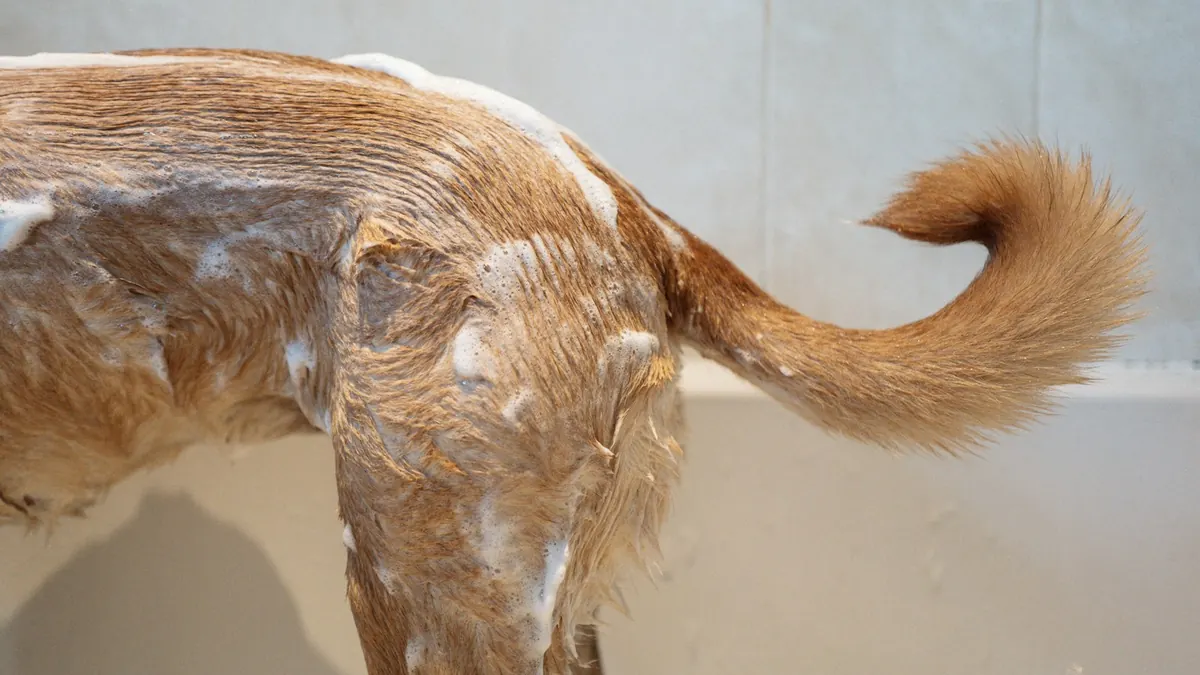
An anti-tick bath removes or kills ticks that are on your dog at the time of the bath, but it gives little or no lasting protection, so it never replaces the year-round tick prevention your vet recommends. A medicated bath is different: it uses a vet-recommended shampoo, left on for about 10 minutes, to help treat a diagnosed skin condition. This guide is for dog owners in Trivandrum (Thiruvananthapuram) and across Kerala, where ticks are a year-round problem and humid weather keeps skin conditions busy. It explains what each kind of bath can and cannot do, when vets recommend medicated shampoo, how a proper medicated bath is done, and how a doorstep medicated bath works. It is general education and names no products: your own vet should diagnose any skin problem and choose your dog's tick prevention.
Current package
Doorstep Dog Grooming
From ₹1,700 per session + 18% GST. A complete professional groom at your home by a two-person team.
What an anti-tick bath does, and what it doesn't
Owners often book an anti-tick bath expecting weeks of protection. That is not what it does.
What it can do:
- •Help remove or kill ticks and fleas that are on the dog during the bath.
- •Give you a chance to check the whole body closely, including the ears, between the toes, the armpits and the groin.
- •Clean the coat so you can spot ticks more easily over the next few days.
What it cannot do:
- •Protect your dog once it is rinsed and dry. An Indian veterinary group's 2026 tick guide describes tick shampoos as supportive, not preventive, and advises using them alongside a collar, an oral product or a spot-on.
- •Deal with the ticks living in your home, kennel or compound, which climb back on.
- •Treat tick fever. A dog with ticks that turns dull, stops eating, or has pale or yellow gums or dark urine needs a vet now, not a bath.
The Tropical Council for Companion Animal Parasites (TroCCAP) advises that dogs with outdoor access be protected against ticks throughout the year, using products applied regularly as per label, whose effect lasts from some weeks to several months. That is the job of vet-advised prevention, not a shampoo.
What a medicated bath is
A medicated bath uses a shampoo that contains active ingredients to help with a specific skin problem. Depending on the condition, a vet may recommend a shampoo that targets bacteria, yeast, greasy or scaly skin, or itch.
The Merck Veterinary Manual describes medicated shampoos as topical treatments for specific skin conditions, and stresses that successful treatment requires identifying the underlying cause. Some skin problems need tablets or injections as well, and only a vet can decide that.
That is why the order matters: vet first, then the right shampoo, then a bath done properly. A medicated shampoo chosen by guesswork can be the wrong treatment, delay the right one, or irritate already sore skin.
When a vet may recommend medicated shampoo
Skin problems are common in Kerala dogs, partly because heat and humidity keep skin and coats damp. See a vet if you notice:
- •Red, moist or oozing patches, or hot spots.
- •Pimples, scabs, crusts or circles of hair loss.
- •A greasy coat, flaky dandruff or a strong musty smell.
- •Constant scratching, licking, chewing at the paws or rubbing the face.
- •Darkened, thickened skin in the armpits, groin or belly.
Your vet may examine the skin, take samples, and test for mites, fungi, bacteria or yeast before deciding on treatment. If a medicated shampoo is part of the plan, ask:
- •How often should I bathe, and for how many weeks?
- •How long should the shampoo stay on?
- •Should I wash first with a regular shampoo?
- •Is this condition contagious to other dogs or to my family?
- •How does bathing affect the timing of my dog's tick prevention?
- •When should I come back for a check?
How a proper medicated bath is done
The Merck Veterinary Manual and VCA Animal Hospitals describe the same basic method. Always follow your vet's instructions and the product label if they differ.
- •Step 1: Brush out loose hair and tangles before the bath.
- •Step 2: Wet the coat with lukewarm water.
- •Step 3: If the dog is dirty, wash first with a regular cleansing dog shampoo and rinse. Merck notes that medicated shampoos are poor cleansers and work best on a clean coat.
- •Step 4: Apply the medicated shampoo, starting with the worst areas. VCA lists the paws, armpits, groin and around the bottom as the usual problem spots. Merck notes that diluting it in water, about 1 part shampoo to 3 or 4 parts water, helps it spread and rinse.
- •Step 5: Leave it on for about 10 minutes, or the time your vet gave you. Use a timer.
- •Step 6: Rinse thoroughly for several minutes. Shampoo residue is a common cause of irritation.
- •Step 7: Towel dry, then keep the dog in a warm, dry place until it is completely dry to the skin. In humid weather a dryer on a safe setting helps.
VCA notes that some redness straight after a bath is common, and that skin often improves within the first few weeks. Call your vet if it keeps getting worse.
Kerala's tick risk: why prevention is year-round
Ticks are not a short-season problem in Kerala.
- •A University of Calicut survey of domestic animals across Kerala districts, published in 2007, found ticks on about 84% of the dogs examined, the highest rate of any species studied.
- •Researchers at the Kerala Veterinary and Animal Sciences University describe the brown dog tick as widely prevalent among dogs in Kerala, with a high occurrence of the tick-borne Babesia and Ehrlichia infections.
- •An Indian veterinary group notes that ticks peak in warm, humid months, especially during the monsoon, when prevention needs extra vigilance.
- •TroCCAP notes that even dogs living mostly indoors may be exposed to ticks, for example when visiting parks or going for grooming and bathing.
In practice: keep your vet's tick prevention on schedule twelve months a year, check your dog every evening, and step up checks and bedding washes through the rains. Our posts on tick fever and on tick and flea prevention cover the signs and the daily routine in more detail.
A medicated bath groom at home with Neolokam
Neolokam's doorstep grooming team comes to your home in Trivandrum. A medicated bath for skin issues is ₹2,200 + 18% GST, the same price as a groom for a large or heavy-coated breed. Travel, two groomers and all equipment and products are included. Standalone grooming is done only at your home, not at the boarding farm, to reduce the risk of spreading skin disease between dogs. Dogs already boarding at Neolokam are groomed during their stay.
Before you book:
- •Tell the team about any skin problem. Contagious conditions need veterinary clearance first.
- •Treat ticks with a vet-recommended product before the groom.
- •Share your area, your dog's breed and a recent coat photo, and mention ticks, matting, skin issues or reactivity, so the right tools and products come along.
- •If your vet has prescribed a particular shampoo or contact time, mention it when you book and ask how the team will work with it.
A groom is not a substitute for treatment. If your dog's skin is getting worse, or you see open wounds, bleeding, swelling or a dog that is unwell, see your vet first.
When it is a vet visit, not a bath
Go to a vet now, rather than booking any bath, if your dog has:
- •Pale, white or yellow gums, dark urine, nosebleeds or bruising, especially after ticks.
- •Sudden weakness, collapse, fever or refusal to eat.
- •Open, bleeding or rapidly spreading sores.
- •Swelling of the face or body, or hives after a bath or a new product.
- •A heavy tick load on a puppy, a senior or a sick dog.
And book a routine vet visit before any medicated bath if the skin problem has never been diagnosed, keeps coming back, or did not improve with the last treatment.
Tick and medicated bath checklist
Screenshot this before your next groom.
- •Vet-advised tick prevention, on schedule, all year, for every dog at home.
- •Daily evening tick check: ears, eyes, armpits, groin, toes, collar line, tail.
- •An anti-tick bath clears ticks on the day; it is not prevention.
- •Skin problem? Vet diagnosis first, then the right shampoo.
- •Ask your vet: how often, how long on the skin, for how many weeks.
- •Wash first if dirty, about 10 minutes contact, rinse thoroughly, dry to the skin.
- •Tell your groomer about skin issues; contagious conditions need vet clearance.
- •Treat ticks with a vet-recommended product before the groom.
- •Go to a vet now for pale or yellow gums, dark urine, bleeding or weakness.
Common questions
Does an anti-tick shampoo protect my dog from ticks?
Only for the moment. Tick shampoos can help remove or kill ticks on your dog during the bath, but once the dog is rinsed and dry they give little or no lasting protection. An Indian veterinary group describes them as supportive, not preventive. For ongoing protection, use the tick prevention your vet recommends, given on schedule all year, and keep checking your dog for ticks every day.
When does a dog need a medicated bath?
When a vet has diagnosed a skin condition that a medicated shampoo can help, such as some bacterial or yeast skin infections, greasy and flaky skin, or itchy allergic skin. The Merck Veterinary Manual stresses that successful treatment depends on identifying the underlying cause. A medicated bath is part of a vet's treatment plan, not a replacement for a diagnosis, so book a vet visit first if your dog's skin is red, smelly, scabby or itchy.
How long should medicated shampoo stay on a dog?
Usually about 10 minutes, unless your vet gives you a different contact time. The Merck Veterinary Manual explains that medicated ingredients often need this long to work, and advises washing first with a cleansing shampoo, because medicated shampoos clean poorly. Rinse very thoroughly afterwards, since leftover shampoo is a common cause of irritation, and dry your dog completely, which matters a great deal in Kerala's humidity.
How often can I give my dog a medicated bath?
Follow your vet's schedule. VCA Animal Hospitals notes that medicated baths are often recommended weekly, but the right frequency depends on the condition, the product and how your dog responds. Some skin improves within the first few weeks. Call your vet if the skin keeps getting worse, if new sores appear, or if your dog seems uncomfortable after bathing. Do not increase frequency on your own.
Can a groomer bathe a dog with a contagious skin condition?
Not until a vet says it is safe. Some skin conditions, including certain mites and fungal infections, can spread to other dogs and sometimes to people. Neolokam asks owners to mention skin problems before booking, and contagious conditions need veterinary clearance before a groom. Standalone grooming happens only at the owner's home, to reduce the risk of spreading skin disease between dogs.
Bottom Line
Anti-tick and medicated baths both have a place, but neither is a shortcut. An anti-tick bath clears ticks on the day; year-round, vet-advised prevention and daily checks are what actually protect a Kerala dog. A medicated bath helps treat a diagnosed skin condition when it is done properly: the right shampoo, about 10 minutes on the skin, a thorough rinse and complete drying. To book a doorstep medicated bath in Trivandrum, call or WhatsApp Neolokam on +91 77363 90719, and tell the team about your dog's skin and any vet advice before the visit.
Related
Sources
- Merck Veterinary Manual (dog owners): Treatment of Skin Disorders in Dogs
- VCA Animal Hospitals: How to Bathe Dogs with Medicated Shampoo
- TroCCAP: Guidelines for the control of ectoparasites of dogs and cats in the tropics (2022)
- Indian veterinary hospital group: Tick prevention in dogs, which products protect and which don't (updated May 2026)
- Prakasan K. and Ramani N. (2007), Tick parasites of domestic animals of Kerala, South India, Asian Journal of Animal and Veterinary Advances
- Lakshmanan B. et al. (2018), Molecular detection of Hepatozoon canis in dogs from Kerala, Journal of Parasitic Diseases (KVASU)
Ready to Book?
Call or WhatsApp Neolokam Trivandrum. No automated replies — you speak to a real person.
More guides for dog owners
- How to Bathe Your Dog at Home in Kerala: A Step-by-Step Guide for Humid WeatherA practical home dog bath for Kerala's heat and monsoon: how often by coat, which shampoo, water temperature, protecting the ears, drying properly and the after-bath tick check.
- Tick Fever in Dogs in Kerala: Signs, Why It Is an Emergency and How to Prevent ItWhat tick fever is, how common it is in Kerala dogs, the signs that mean go to a vet now, how vets diagnose it, and a daily prevention routine for home, yard and boarding.
- Dog Grooming at Home vs Salon in Kerala — Which is Better for Your Dog?Home grooming vs salon grooming for dogs in Kerala: the real trade-offs, which is better for different types of dogs, and what professional at-home grooming actually involves.
- Dog Haircuts for Kerala Summers: Which Coats to Trim, Which Never to Shave, and What It CostsWhich dogs can have a summer haircut in Kerala and which double-coated breeds should never be shaved, the common styles explained, sunburn risk, and Neolokam's doorstep grooming prices.
- Home Dog Grooming in Trivandrum — Complete Guide (2026)Home dog grooming in Trivandrum: what it includes, how it works, what to expect from a professional home visit, and why most dogs handle it better than salon grooming.
- How Often Should You Groom Your Dog in Kerala? A Coat-by-Coat Schedule for Humidity and Monsoon, With Yearly CostsA practical grooming schedule for Kerala dogs by coat type: baths, brushing, nails, ears and professional grooms, adjusted for humidity and the monsoon, with the signs a groom is overdue and what a year of doorstep grooming costs.