
Dog Ear Cleaning in Kerala: How to Clean Safely, Infection Signs and When to See a Vet
November 2026 — Neolokam, Trivandrum
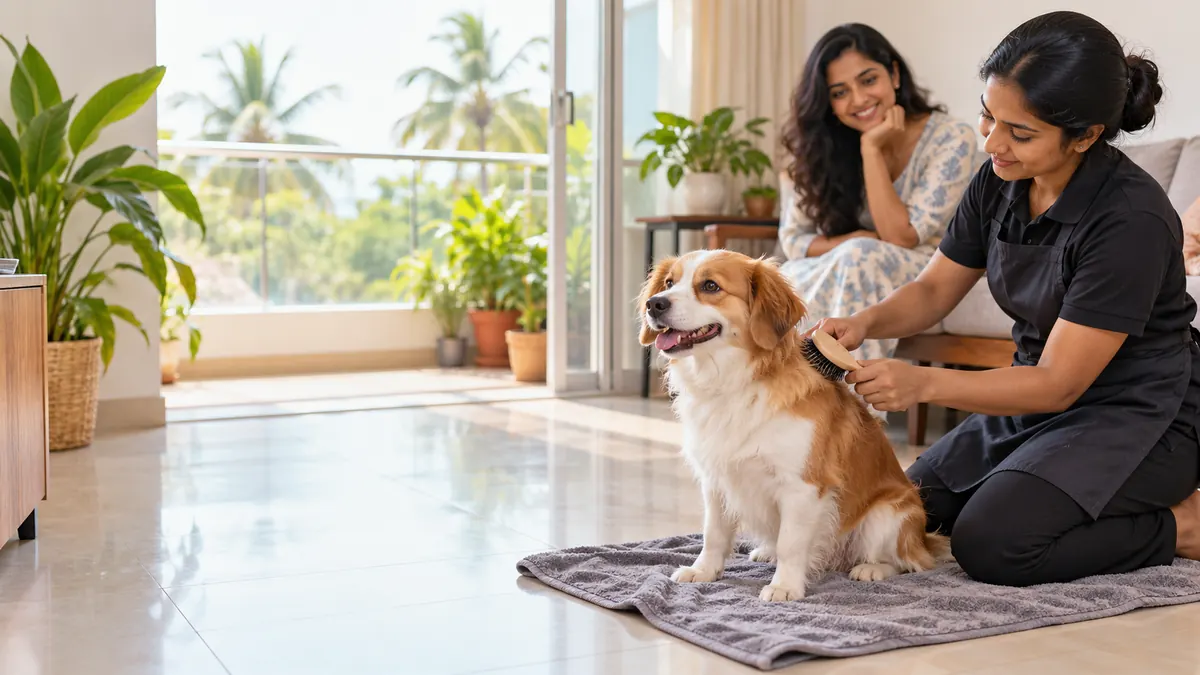
Dog ear cleaning is simple when the ear is healthy: fill the canal with a vet-recommended cleaner, massage the base of the ear, let your dog shake, and wipe away what comes out with cotton wool, never cotton buds. Clean when you see wax or dirt and after swimming or baths. A red, smelly, painful or discharging ear needs a vet, not cleaning.
In Trivandrum (Thiruvananthapuram) and across Kerala, ear trouble is one of the most common reasons dogs scratch and shake their heads, because humidity, monsoon walks, baths and swimming all keep ears damp. This guide explains how often to clean, a safe step-by-step method, which dogs are most at risk, the signs of infection, and when a vet visit is the right call. It is general guidance; your vet should check any ear that looks or smells wrong.
Current package
Doorstep Dog Grooming
From ₹1,700 per session + 18% GST. A complete professional groom at your home by a two-person team.
How a dog's ear works, and why that matters
A dog's ear canal is shaped like an 'L': it runs down the side of the head, then turns inwards towards the eardrum. Cornell's Riney Canine Health Center explains that because the eardrum sits past that bend, gentle cleaning at home carries a low risk of damaging it.
The same shape is the problem. Wax, water and debris collect at the bend, where they are warm and dark. If the ear flap hangs down over the opening, or the canal is full of hair, air circulates even less. That is why some dogs need regular ear care and others almost never do.
Why ear infections are common in Kerala
The Merck Veterinary Manual separates the causes of outer ear inflammation, called otitis externa, into three groups:
- •Primary causes, which start the problem: allergies, including food and environmental allergies, ear mites, foreign bodies such as grass seeds, and some hormonal and immune diseases.
- •Predisposing factors, which make it more likely: hanging ear flaps, narrow canals, hairy ears and excess moisture from the environment or swimming.
- •Secondary infections with bacteria and yeast, which take hold once the ear is inflamed. Merck also lists over-cleaning as a secondary cause.
Kerala adds moisture at every turn: high humidity much of the year, rain and puddles in the monsoon, frequent baths to keep dogs cool, and swimming. Ticks are common here too and often attach on or inside the ear flap. None of these alone guarantees an infection, but together they keep ears damp and irritated.
Dogs most at risk
Any dog can get an ear infection, but some ears need more attention:
- •Hanging, floppy ears: Cocker Spaniels, Beagles, Labradors, Golden Retrievers, Basset Hounds and Dachshunds.
- •Hairy ear canals and long coats around the ear: Shih Tzus, Lhasa Apsos, Poodles and many doodle crosses.
- •Dogs with allergies or itchy skin, since allergy is a common root cause.
- •Water lovers: dogs that swim often, wade in streams or get bathed frequently.
- •Dogs with a history of ear infections.
Upright-eared dogs such as indies and German Shepherds have better airflow, but they still pick up ticks, dust and grass seeds, and they still get allergic ear disease. Check every dog's ears once a week.
How to clean your dog's ears safely, step by step
Based on guidance from the Merck Veterinary Manual and Cornell:
- Choose a quiet time, after a walk, with treats ready and a towel nearby.
- Use an ear cleaner your vet recommends, and real cotton wool or cotton pads.
- Hold the ear flap up and gently fill the canal with cleaner. Do not squirt it in hard; Cornell warns that forceful pressure from the bottle could damage the eardrum. If your dog will not accept liquid in the ear, soak a cotton pad and use that instead.
- Massage the base of the ear for about half a minute, until you hear a squelching sound.
- Let go and let your dog shake its head. Stand back or hold the towel up.
- Wipe out loosened wax and debris with cotton, working from inside outwards, no deeper than about one knuckle of your finger.
- Reward your dog, then repeat on the other ear with fresh cotton.
Stop if your dog yelps, pulls away sharply or the ear looks red and sore. Cleaning a painful, infected ear can hurt and can wash away what the vet needs to see.
What not to do
- •Do not use cotton buds. Both Merck and Cornell say they push debris deeper.
- •Do not use alcohol, hydrogen peroxide, oils or home mixtures unless your vet advises them. Cornell warns against alcohol and peroxide in particular.
- •Do not put drops in an ear that is painful, smelly or discharging until a vet has examined it. Merck explains that some cleaners and medicines can harm the inner ear if the eardrum is damaged, and only a vet can check that.
- •Do not over-clean healthy ears. Cleaning daily without a reason can irritate the canal.
- •Do not pluck hair from inside the canal routinely. Merck advises against routine removal of canal hair, as it can cause inflammation; trimming hair around the ear opening is different and is part of a normal groom.
- •Do not use leftover medicine from a previous infection. Different infections need different treatment.
After baths, swimming and monsoon walks
Water in the ears is one of the easiest problems to prevent.
- •At bath time, wash the head last and keep water out of the ear canals, as the Merck Veterinary Manual advises. A damp cotton pad on the face and ears works well.
- •After swimming, let your dog shake, towel the outer ears dry, and clean with a vet-recommended cleaner if your vet suggests it. Cornell lists swimming and bathing as reasons to clean.
- •For dogs that swim often, ask your vet about a drying ear cleaner.
- •In the monsoon, towel the ears after walks along with the paws and belly.
At Neolokam's farm, dogs can use the swimming and splash area and the stream during supervised swims and boarding stays. If your dog is prone to ear problems or is being treated for one, tell the team when you book and ask your vet whether swimming is fine for now.
Signs of an ear infection: when to see a vet
Book a vet visit if you notice:
- •Head shaking or scratching at one or both ears.
- •Redness, swelling or heat inside the ear flap.
- •A bad or yeasty smell.
- •Brown, yellow, black or bloody discharge, or much more wax than usual.
- •Pain or flinching when the ear or head is touched.
Go promptly if you see a head tilt, loss of balance, circling, or a soft, swollen ear flap. That swelling is often an aural haematoma, a pocket of blood caused by violent head shaking, and the Merck Veterinary Manual notes it usually needs veterinary treatment and the ear problem behind it treated too.
Your vet will look down the canal with an otoscope and may take a swab to see whether bacteria, yeast or mites are involved. That is what decides which medicine works. Infections that keep coming back usually have an underlying cause, often allergy, that needs managing.
Professional ear care with doorstep grooming
Ear cleaning is part of every complete groom from Neolokam. Standalone grooming is done only at your home, never at the farm, to reduce the risk of spreading skin disease. Two groomers come by scooter with all equipment and products, and travel is included.
- •Regular complete groom: Rs 1,700 plus 18% GST. It includes nail cutting, ear cleaning, brushing and combing, a shampoo bath, hygiene and paw-pad trimming, scissor shaping and a blow-dry.
- •Large or heavy-coated breeds, or a medicated bath for skin issues: Rs 2,200 plus 18% GST.
There is no published ear-only price, so if you want only ear cleaning, ask the team on WhatsApp. Groomers clean the outer ear and trim hair around the opening; they do not treat infections. If an ear is red, smelly or painful, see your vet first, and tell the team about any skin or ear problem before booking. Our guide to how often to groom a dog in Kerala explains how ear checks fit into a grooming routine.
Common questions
How often should I clean my dog's ears?
Only as often as your dog needs. Cornell's Riney Canine Health Center says healthy ears generally need cleaning only when dirt or wax is visible, and that maintenance cleaning every one to two weeks suits dogs prone to problems, such as floppy-eared dogs or dogs with allergies. Clean after swimming or bathing too. Over-cleaning can irritate the ear, so check weekly but clean when needed.
Can I use cotton buds to clean my dog's ears?
No. Both the Merck Veterinary Manual and Cornell advise against cotton buds, because they push wax and debris deeper into the canal. Use a vet-recommended ear cleaner and cotton wool or cotton pads, and wipe only the part of the ear you can see, no deeper than about one knuckle of your finger. Avoid alcohol, hydrogen peroxide and oils unless your vet advises them.
What are the signs of an ear infection in dogs?
Common signs are head shaking, scratching at the ear, redness, swelling, a bad smell, brown, yellow or black discharge, more wax than usual and pain when the ear is touched. A tilted head, loss of balance or a swollen, fluid-filled ear flap need a vet promptly. Some signs also occur with allergy, so a vet should look inside before any drops are used.
Why do dogs get more ear infections in Kerala?
Moisture is a big part of it. The Merck Veterinary Manual lists excess moisture from the environment or swimming, hanging ear flaps and hairy ear canals as predisposing factors. Kerala's humidity, monsoon walks, frequent baths and swimming all keep ears damp. Allergies and ear mites are common underlying causes. Drying the ears after water and checking them weekly helps.
Should I clean my dog's ears after swimming or a bath?
Yes, gently. Cornell recommends cleaning after swimming or bathing because moisture left in the canal can lead to problems. Let your dog shake, dry the outer ear with a towel, then use a vet-recommended cleaner if your vet suggests one. Merck also advises keeping water out of the ear canals during baths, for example by washing the head last and carefully.
Does Neolokam's grooming include ear cleaning?
Yes. Every complete doorstep groom includes ear cleaning, with nail cutting, brushing, a shampoo bath, hygiene trims, scissor shaping and a blow-dry. The regular complete groom is Rs 1,700 plus 18% GST. There is no published ear-only price, so ask on WhatsApp. Groomers clean the outer ear; a painful, smelly or discharging ear needs a vet first.
Bottom Line
Healthy dog ears need only gentle, occasional cleaning: a vet-recommended cleaner, a massage, a shake and a wipe with cotton, never cotton buds. In Kerala's humidity, dry the ears after baths, swims and monsoon walks, and check them weekly, especially in floppy-eared and hairy-eared breeds. Head shaking, smell, discharge or pain mean a vet visit before any cleaning. For a complete groom with ear cleaning at home, message Neolokam on WhatsApp at +91 77363 90719 with your area, your dog's breed and coat, and a preferred date.
Related
Ready to Book?
Call or WhatsApp Neolokam Trivandrum. No automated replies — you speak to a real person.
More guides for dog owners
- Anti-Tick and Medicated Baths for Dogs: What They Do, What They Don't, and How a Medicated Bath Works at HomeWhat anti-tick and medicated baths can and cannot do, when a vet recommends a medicated shampoo, how a proper medicated bath is done, what Kerala's tick risk means for your routine, and how a doorstep medicated bath works.
- How to Bathe Your Dog at Home in Kerala: A Step-by-Step Guide for Humid WeatherA practical home dog bath for Kerala's heat and monsoon: how often by coat, which shampoo, water temperature, protecting the ears, drying properly and the after-bath tick check.
- Dog Grooming at Home vs Salon in Kerala — Which is Better for Your Dog?Home grooming vs salon grooming for dogs in Kerala: the real trade-offs, which is better for different types of dogs, and what professional at-home grooming actually involves.
- Dog Haircuts for Kerala Summers: Which Coats to Trim, Which Never to Shave, and What It CostsWhich dogs can have a summer haircut in Kerala and which double-coated breeds should never be shaved, the common styles explained, sunburn risk, and Neolokam's doorstep grooming prices.
- Home Dog Grooming in Trivandrum — Complete Guide (2026)Home dog grooming in Trivandrum: what it includes, how it works, what to expect from a professional home visit, and why most dogs handle it better than salon grooming.
- How Often Should You Groom Your Dog in Kerala? A Coat-by-Coat Schedule for Humidity and Monsoon, With Yearly CostsA practical grooming schedule for Kerala dogs by coat type: baths, brushing, nails, ears and professional grooms, adjusted for humidity and the monsoon, with the signs a groom is overdue and what a year of doorstep grooming costs.